Into The Harvest
"So pray to the Lord who is in charge of the harvest; ask him to send more workers into his fields." Matthew 9:38
The History and Idolatry of Decisionism
 The great news of the Gospel is that we have a God in Christ who supernaturally saves sinners. One of the clearest pictures of the relationship between the preacher’s responsibilities in evangelizing and God’s bringing sinners to new life can be seen in the vision of the prophet Ezekiel in the Old Testament.
In Ezekiel’s vison, he stares out across a lifeless valley of dead, dry bones. These skeletons had no hope of putting themselves back together. They had no hope of recreating a new heart within their decaying chest cavity. Furthermore, these bones had no desire for life. They could not decide that they wanted to life and give themselves breath because they were dead. As Ezekiel gazed out at this valley of dead bones, the Lord asked him a question.
“And he said to me, “Son of man, can these bones live?” And I answered, “O Lord God, you know.” Ezekiel 37:3.
God asked Ezekiel how it could come to pass for the dead bones to have life in them. Ezekiel did not pretend to have the answers. Ezekiel was smart enough to realize that he could not pull off the supernatural. His only response to God was, “Only you know God.” For there is nothing man can do to bring that which is dead to new life. God’s question to Ezekiel is followed by a startling command to the prophet.
“Then he said to me, “Prophesy over these bones, and say to them, O dry bones, hear the word of the Lord. Thus says the Lord God to these bones: Behold, I will cause breath to enter you, and you shall live. And I will lay sinews upon you, and will cause flesh to come upon you, and cover you with skin, and put breath in you, and you shall live, and you shall know that I am the Lord.” Ezekiel 37:4-6.
God told Ezekiel to prophesy or speak the word of the Lord over these dead bones. This is the only job given to the prophet. From there, through the spoken word of the Lord, God pulls off the supernatural. The Lord covers the once dead bones with skin and gives them new life. Again, the bones did not pray a prayer, and then God respond to their prayer. God alone was the catalyst to this new life.
The vision of Ezekiel was not randomly placed in the pages of scripture. As Jesus himself said after His resurrection of the writings of the Old Testament prophets;
“These are the words I spoke to you while I was still with you: Everything must be fulfilled that is written about Me in the Law of Moses, the Prophets, and the Psalms.” Luke 24:44.
Everything in the Old Testament points to Christ. Everything in the writings of the prophets, the Psalms, and the books of Moses are God telling us something about Himself. In the vision portion of Ezekiel, God is giving us a glimpse of the spiritually dead state of sinful man and the supernatural nature of salvation that only God can bring.
Ezekiel plays the part of the Christian evangelist. He has no secret formula to restore life to the dead. He has no reliance on anything in himself to give these bones hope. His only reliance is on the Lord as he proclaims the word.
God’s supernatural work in salvation as well as the minister’s total reliance on the Spirit have been historically acknowledged throughout the ages. However, as the centuries progressed, man began to think that he needed to help God out in this supernatural work of salvation and employ methods that never existed Biblically or historically before the 20th century.
Prior to the 20th century, evangelist were ecstatic if only 10 percent of people who came forward for prayer were actually saved at the alter. However, in many churches today, everyone who comes forward after a sermon and repeats a form of salvation prayer is told by the minister that they are now born again Christians. Either we have improved the Gospel over time, or our methods of evangelism are producing a staggering number of still births.
Here is a modern day snap shot example of how many churches have come to view the salvation process.
Step one; a sermon is given followed by a time of response. The listener is told to stay in their seat and raise a hand or perhaps come forward if they would like to be saved.
Step two; once the person has either raised a hand or come forward to the alter, a salvation prayer is repeated. Many ministers believe that if only a person prayers this salvation prayer once in their life, then they will go to Heaven upon their death regardless of how they live their earthly lives. This widely used two step process of evangelism gives the person coming forward a false idea of what salvation is, and it gives the minister undue bragging rights he and God saved another one.
Barna Christian Research recently reported that 84-97 % of professing Christians in the United States eventually fall completely away from their faith. They have a form of Godliness, professing to be saved due to once praying the salvation prayer, and they live a life apart from God. They deny that salvation is fully a supernatural work of God and claim that they are saved due to what they did at the end of a service.
“But understand this, that in the last days there will come times of difficulty. For people will be lovers of self, lovers of money, proud, arrogant, abusive, disobedient to their parents, ungrateful, unholy, heartless, unappeasable, slanderous, without self-control, brutal, not loving good, treacherous, reckless, swollen with conceit, lovers of pleasure rather than lovers of God, 5having the appearance of godliness, but denying its power. Avoid such people.” 2 Timothy 3:1-5.
There is nothing wrong with an alter call that is done with reverence to the Lord. Charles Finney is such an example. Finney would ask seekers to come down after the service to a designated room where they could receive council and guidance on how one could attain salvation in the Lord. Granted, Finney never used the sinners prayer tactic nor told anyone that they were saved due to their profession of faith. Finney knew only God could see the true intentions and the heart of man. This is why Finney is called the father of the alter call.
Finny once said, “Never tell as sinner anything, or direct him to do anything that will stop him short of absolute submission to God. Suppose you tell an unbeliever to pray a prayer or teach him anything less than God’s absolute hand in saving repentance, and then that night he falls and breaks his neck. Whom will God blame when the man stands unjustified before God because he trusted in a prayer rather than in Christ? It makes the hearts of the faithful bleed to see how many people delude the hearts of anxious sinners.”
The perversion of the sinners prayer came onto the scene for the first time ever in the early to mid 1900’s beginning with an evangelist named Billy Sunday. Sunday was an American athlete who, after being a popular outfielder in baseball’s National League during the 1880s, was converted to Christianity and became a full time evangelist.
Billy Sunday became frustrated with the alter call methods of ministers who had long come before him. Sunday was once quoted as saying, “Some people do not think that they can be converted unless they go down on their knees in the straw at a camp revival meeting or unless they labor in prayer all hours of the night. What I want to preach is that a man can be converted without all of that fuss.” Due to this, Billy Sunday would plead for sinners to come forward, pray a prayer, and then shake his hand as a seal of their new found commitment to God. Sunday would then declare that person to be saved right then and there with no further questions asked. After Billy Sunday, this quick and easy method of evangelism became extremely popular.
“And they said, “Believe in the Lord Jesus, and you will be saved, you and your household.” Acts 16:31.
Ministers such as Billy Sunday would incorrectly use a verse like this to justify their sinners prayer type evangelism. They would wrongly claim that the verse states that all that is required is mere cognitive belief that there is a God. But as evangelist R.A. Torrey rightly said, “Saving faith is believing God, not just believing in God.”
Believing God involves a revelation of God that can only come through the direct influence of the Holy Spirit. Just believing in facts about God or treating salvation like a flu shot via praying a one time sinners prayer is not saving faith.
“The natural person does not accept the things of the Spirit of God, for they are folly to him, and he is not able to understand them because they are spiritually discerned.” 1 Corinthians 2:14.
This is why ministers before Billy Sunday never presumed to tell people they were saved based on anything they had done. Sunday preferred to never leave a person with a doubt in their mind that they were saved. In essence, Sunday’s evangelism eliminated the wrestling with the Spirit, and the professing Christians need for constant personal examination of the soul as the apostle Paul called for in 2 Corinthians 13:5. If they ever found themselves doubting their salvation due to a love of sin in their lives, they were told to recall the moment they prayed the sinners prayer and look to their past actions for assurance of salvation.
Starting with Billy Sunday, ministers began to feel pressured to take grievous short cuts in their evangelism to assure and boast of higher numbers of converts. Conversion to Christ began to be seen as being as easily attained as buying an item at a local mall. The term “Sunday Conversion” caught on during this time and eliminated the Biblical exhortation of Christ for the sinner to count the high costs that accompanied true salvation such as turning from sin and facing worldly persecution.
“Sunday Conversion” could be easily attained by anyone willing to come forward and shake his hand. This was a radical departure from what the Bible says regarding true salvation. Throughout history, ministers and preachers of God’s Word have taught the necessity of regeneration.
Regeneration is the supernatural process in which God causes the sinner to actually begin to hate the sins that he once loved and love the righteousness of God that he once hated. 2 Corinthians 5:17 describes this as become a totally new creation. Regeneration does not mean that the persons is now sinless, because as long as we have flesh we will fail. It does however mean that it is impossible given the new nature for that person to walk in a continual, deliberate, practice of sin.
Before the 20th century, believers fully taught that salvation was a mysterious event orchestrated only by a sovereign God. The pre 20th century method of salvation lined up with the Bible. All evangelicals, including Jonathan Edwards, George Whitfield, and John Wesley taught the born again experience as being definite, complete, and accompanied by identifiable marks in the persons life.
As Whitfield said, “The new creation is not a mere metaphor. It is as self evident as a tasteless pallet suddenly brought to life at a sumptuous feast. Everyone who has the least concern for his immortal soul should never cease striving after the Lord until he has experienced a real saving inward change wrought in his heart, and therefore knows of the truth, that he dwells in Christ and Christ dwells in him.”
From the teachings of Christ, the Apostle Paul, and throughout the ages preceding the 19th Century, evangelicals taught that salvation was accompanied by a born again experience. This experience being that the Holy Sprit had actually entered into a person, and the proof of that was that their life and desires began to conform to the will of God. The Spirit of God is seen in how they now live out their lives as God’s new creation. When a person is truly saved, God’s Holy Spirit inhabits their soul and literally begins to change their nature from the inside out.
“Do you not know that he who unites himself with a prostitute is one with her in body? For it is said, “The two will become one flesh.” But whoever is united with the Lord is one with him in spirit.” 1 Corinthians 6:16-17.
Johnathan Edwards once remarked that a love and pursuit of holiness and happiness in God’s righteousness were new attributes of the former sinner once they have been saved because God now dwells in them. Edwards identified five different stages in which God prepares the heart of person who will come to know Christ.
The first stage is the awareness within that person that he or she is eternally lost. For this to take place, this person much acknowledge that they are a sinner, and because of that God owes them nothing but His wrath and separation from God in Hell.
The second stage is when the seeker tries in his own power to stop sinning and to remove his guilt anyway he can.
The third stage is when the seeker comes to realize that only God can save him from sin. And only God can give new desires, turning a heart of stone into a heart of flesh.
The forth stage is when the seeker begins to see themselves as rightly deserving sinners in light of the Holiness of God. They see the reality that we have broken all of God’s laws, and that God would still be just and right if we were to never be saved. He knows that God doesn’t have to save him, and he is at the mercy of God.
The fifth stage is when the seeker begins to have religious affections for God. He no longer sees the law of God as a burden, but rather as King David said, as honey on the lips. There is now a deep appreciate for the atoning work of Christ on the cross, dying in our place and for our sins.
It was not the practice, as it seems to be in our day and age, of the early ministers to tell people that they were now saved based on a confession they made or prayer they prayed. It wasn’t that they didn’t believe God could save, but rather they did not presume to know that which only God can know. They didn’t know who was truly repentant in their hearts and who had merely experienced an emotional moment and made a false profession that weeks later, they would abandon.
John Wesley knew more than any other evangelist the deceitfulness of the human heart. He served as a priest and missionary to the indians all the while knowing that he was not truly saved. After twenty three years of seeking God and striving to come to grips with his own sinfulness, he was finally born again.
Wesley said, “Saving faith is the gift of God. He can as easily give this faith in a moment as in a thousand years. We know not why he bestows this on some even before they ask for it, and on some after they have sought it for a few days. And permits other believers to struggle with it for many years.”
Modern seeker sensitive theology teaches predominantly that salvation is as easy as praying a prayer and signing your name to the back of a card. But most people go through a struggle of faith and self examination when God truly begins to change their heart. The prophet Isaiah was a righteous man and believed in God. But it wasn’t until Isaiah saw himself as a sinner in light of the Holiness of God that he fell to his knees in true repentance (Isaiah 6). Jacob literally wrestled with God (Genesis 32). And Job in like manner was a righteous man. It wasn’t until Job saw the Lord through affliction that he could say at the end of the book;
“I had heard of you by the hearing of the ear, but now my eye sees you;” Job 42:5.
Most people experience a struggle of faith and a soul seeking examination of self prior to God saving them. Franklin Graham is a great example of this. When he was eight years old he made a decision for Christ and was told he was saved. But according to Graham, it was not until he was 22 that he was truly born again.
Before the Billy Sunday’s of the world changed the salvation paradigm, people know that making a mere decision for Christ was not the same as being born again. This struggle of faith began when seekers became concerned for the welfare of their souls, and ended when they knew without a doubt due to the extreme change God had wrought within their hearts, that they were born again.
John Calvin’s struggle of faith lasted twelve years. George Foxes struggle of faith lasted 12 years as well. John Wesley’s struggle of faith lasted 23 years. John Whitfield’s struggle of faith lasted 1o years. Jonathan Edwards struggle of faith lasted 5 years. David Brainard’s struggle of faith lasted 9 years. John Newton’s struggle of faith lasted 6 years, and Charles Spurgeon’s struggle of faith last 4 years.
Charles Spurgeon gave an example of someone who merely wanted salvation and a person who had genuinely experienced salvation. Spurgeon said, “For years as a child I tried to learn the ways of salvation. And either I did not hear it set forth, which I believe could not have been the case, or else I was spiritually blind and deaf and could not see it and could not hear it. Had I read my Bible? Yes, and read it earnestly! Had I never been taught by Christian people? Yes I had, by my mother and father and others. Had I not heard the Gospel? Yes I think I had. Yet somehow it was like a new revelation to me!”
Edwards, Whitfield, Spurgeon and most all evangelist before the 20th century taught that true saving faith was supernatural. Just agreeing to some facts and walking through a man made process is not salvation. Edwards once said, “Those who aren’t saved think it disastrous to enter into a period of self examination since their faith is based solely on hope. If a person has nothing but hope to prove he’s saved, then to question that hope would ruin his entire position. Those who insist on a person living by faith when they have no experience of struggle are very absurd in their notions of faith. What they mean by faith is believing that they are in good estate. Hence they count it a dreadful sin to doubt of their state, whatever frames that they are in. If this be faith, the Pharisees who committed the unpardonable sin against the Holy Spirit would have to be seen as having an extraordinary faith.”
“Now faith is the assurance of things hoped for, the conviction of things not seen.” Hebrews 11:1.
Theologians historical have known that faith is not the same as hope. Faith comes by and through the Holy Spirit. This is especially true for the faith that is necessary for regeneration.
“For by grace you have been saved through faith, and this is not of yourselves, but the gift of God. Not by works, so that no man may boast.” Ephesians 2:8-9.
Saving faith is a gift from God. We are totally dependent upon Him for the born again experience. We cannot do anything to earn this gift, or decide to give it to ourselves, for that would lead to boasting. As Jonah 2:9 states, “Salvation is of the Lord.”
Oswald Chambers made a clear distinction between the Billy Sunday type of convert and those who had been truly born again. Chambers said, “When a man fails in personal Christian experience, it is nearly always that he never really received anything. However, when a man is born again, he knows it because he has received something as a gift from almighty God and not because of his own decision.”
“children born not of natural descent, nor of human decision or a husband’s will, but born of God.” John 1:13.
In the 1930’s, Dawson Troughtman started a group called The Navigators to combat the Billy Sunday type of evangelism. He taught his Navigators, “You can lead a man to Christ in a couple of minutes to a couple of hours, but it takes 20 hours to a couple of years to follow him up.” In essence, Troughtman was saying that true salvation is seen over a lifetime of little by little conformity to Christlikeness.
Christ can save in an instant. But the proof is seen in the life that follows, not in the prayer that was prayed or card that was signed. I am by no means saying that a person who was led to salvation by the means of a sinners prayer is not saved. However, it that be the case, God saved you in spite of the methods used, not because of them.
This Billy Sunday type of evangelism that is still very popular in our world today is called decisionism. And it is idolatry because it exalts the tactics of man above the work of God. It is to place the decision of the believer as the catalyst of salvation, and minimize the supernatural work of God in bringing a spiritually dead soul to new life. Decisionism gives partial bragging rights to the preacher in saving sinners, and it gives opportunity for partial boast from the one who had received salvation, because they can say they were saved due to the decision that they made.
Jesus said only two things were required for salvation. Repentance and belief (Mark 1:15). Christ never utilized a sinners prayer. Rather, He called for a life change as proof of salvation. Decisionalistic evangelism does not stress the need for repentance and reliance upon God, but rather rushes seekers through a few man made hoops in hopes of seeing quick and struggle free conversions that require little to nothing from the convert.
Again, the Lord can save a man instantaneously. The struggle of faith comes not from the Lord’s salvation, but in the truly regenerate man’s process of sanctification that follows. Paul never said “Say a one time prayer and then just rest in your salvation and enjoy your earthly desires. Rather Paul said to struggle, to search, and to work out this salvation through constant examination of self through the lenses of the Word. We rejoice in our salvation, but we never get lazy in our pursuit of righteousness. The pursuit of the Holiness of God becomes our new life long quest.
“Therefore, my beloved, as you have always obeyed, so now, not only as in my presence but much more in my absence, work out your own salvation with fear and trembling,” Philippians 2:12.
However, it is not for a man to tell another man that he is saved based on a moments decision that was made. God is the only one that tells a man that he is saved based on the change in their hearts, and that pursuit of Holiness that follows the many years afterward. We would do well to learn about true salvation from the scriptures as well as hundreds of years of church history that followed.
“Examine yourselves, to see whether you are in the faith. Test yourselves. Or do you not realize this about yourselves, that Jesus Christ is in you?—unless indeed you fail to meet the test!” 2 Corinthians 13:5.
Reformed at The Roots
 When we first told our four year old son Luke that he was going to his dentist appointment, tears began to stream down his face. His was petrified. Luke had never been to the dentist and this was to be his first dental cleaning. Initially I couldn’t understand why the word dentist provoked so much terror in my son. But as I began to talk to Luke, I realize that he had a terrible misconception of what a dentist actually was. Luke associated “dental cleaning” with full blown invasive surgery for some reason. Once we arrived at the dentist office and the dental assistant took time to show Luke how simple and painless a cleaning was, his mind was set at ease. Luke ended up enjoying his visit to the dentist. What Luke had once thought about a dentist proved to be quite the opposite from the horror he had imagined.
Words are powerful and can invoke fear, especially if we have misconceptions of what they actually mean. When they are misunderstood, words can be very harmful and even cause undue division between people. Ive found this to be true as it pertains to Christianity. Theology in particular. Within the walls of the church, far too often swords are brandished and battle lines are drawn due to a lack of knowledge and understanding on a variety of subjects.
“My people are destroyed for a lack of knowledge.” Hosea 4:6.
One of the most misunderstood theological leanings in modern day evangelicalism is reformed theology. The word widely used to describe reformed theology is Calvinism. And this word has been known to start many a fire among the people of God.
Recently I was invited by a dear brother and fellow Pastor to come to his church and preach one Sunday morning. This pastor jokingly shared with me that when he brought it to the attention of his deacons that I would be preaching, the chairman of the deacons was unusually quiet. After the meeting, the pastor approached the deacon chair and asked, “Did you say Charlie Parish was coming to preach?” To which the pastor replied, “Yes I did. What seems to be the problem?” In almost a whisper, as if what he was about to say were a curse word, the deacon chair said, “Isn’t he a…you know…a Calvinist?”
Ironically I have never labeled myself other than saying that I am a Christ follower. I do not dare preach a man much less John Calvin. I preach one man, THE God Man Jesus Christ. I just happen to agree with Calvin’s deeply rooted exegesis of scripture. And the interpretations of Calvin were not even of his own creation. He merely ascribed to the exegesis of Godly men who came before him. As Charles Spurgeon once said;
“The old truth that Calvin preached, that Augustine preached, that Paul preached, is the truth that I must preach to-day, or else be false to my conscience and my God.” -Spurgeon
My Pastor friend went on to have a discussion with his chairman of the deacons and came to realize he had no clue what a Calvinist was. He just associated the word with negativity and untruths. This is a very common story that has occurred quite often. The word Calvinism carries a negative connotation with it, yet very few actually know what it is. And few have very little understanding of how it aligns with scripture as well as Christian history as a whole.
One of the most common misunderstandings regarding Calvinism is that people will say it is the doctrine of man, not God. It is true that Calvinism was named after the teachings of the 15th century theologian John Calvin. However, Calvin was not the first to teach what is known as Calvinism. The teaching was called Augustinianism in the early fourth century, named after Saint Augustine. Before Augustine taught the doctrines of sovereign grace (also known as Calvinism), the apostle Paul taught them. And before Paul, Jesus Himself.
Furthermore, John Calvin was long deceased by the time the term Calvinism was coined. In the late 1500’s, Dutch theologian Jacob Arminius was not a proponent of the doctrines of sovereign grace. And upon the death of Arminius, his followers carried on his teachings. They were refuted by followers of John Calvin. The five points of Calvinism arose to counteract the five points of Arminianism. This debate between the two camps came to a head at the Synod of Dort (1618-1619).
The Synod concluded with a rejection of the Arminian views, and set forth the Reformed doctrine on each point, namely: total depravity, unconditional election, limited atonement (arguing that Christ’s atoning work was intended only for the elect and not for the rest of the world), irresistible (or irrevocable) grace, and the perseverance of the saints. These are the five points of Calvinism which have been historically defended as biblical truth.
The very crux of reformed theology centers around the free will of man versus the sovereign electing grace of God. Even before the Synod of Dort in the early 4th century this subject was highly debated. The controversy was addressed in the early 4th century when a British monk named Pelagius opposed Augustine’s famous prayer: “Grant what Thou commandest, and command what Thou dost desire.”
Pelagius was sternly against the idea that a divine gift of grace is necessary for a believer to perform what God commands. For Pelagius and his followers responsibility always implies ability for man to chose either to obey God or not. If man has the moral responsibility to obey the law of God, he must also have the moral ability to do it.
On the other hand, Augustine fully believed and taught that man is dead in His sins apart from God supernaturally opening his eyes and implanting a new desire through the Holy Spirit. This was the same theological view that John Calvin would hold centuries later.
Eventually, Augustine’s views were embraced as being orthodox and Pelagius was condemned as a heretic by Rome. Years later Pelagianism was replaced by Semi-Pelagianism and it was likewise condemned by the Council of Orange in 529.
The basic assumptions of this view condemned of man’s free will presiding over the sovereignty of God persisted throughout church history only to reappear in Medieval Catholicism, Renaissance Humanism, Socinianism, Arminianism, and modern Liberalism. The seminal thought of Pelagius is pervasive in the modern day church. And to this day much of the modern church is held captive by it.
In 1525 The Bondage of the Will was published by a German Monk by the name of Martin Luther. It was his reply to Desiderius Erasmus’s treatise entitled Freedom of the Will, which Erasmus wrote in 1524. The issue of their debate centered around whether human beings, after the Fall of Man, are free to choose good or evil. The debate between Luther and Erasmus is one of the earliest of the Reformation over the issue of free will and predestination.
Erasmus believed and taught that all humans possessed free will, and that the doctrine of predestination did not line up with the scriptures. He argued against the belief that God’s foreknowledge of events was the cause of events, and held that the doctrines of repentance, baptism and conversion depended on the existence of free will.
On the other hand Luther believed that mans sin nature restricts human beings from working out their own salvation, and that they are completely incapable of bringing themselves to know God unless God supernaturally acted first. Luther asserted in regards to salvation, there is no free will for humanity because any will they might have is overwhelmed by the influence of sin.
Much like Pelagius and years later Arminius, Erasmus views were greatly overshadowed by the sovereignty of God that was preached by Luther.
I once had an older lady who had been devoted to the church all of her life approach me regarding the doctrines of grace, saying, “We don’t believe Calvinism to be true because we are Baptist.” However, her statement showed her lack of historical understanding. Most of the original Baptist churches were known as particular Baptist. The particular Baptist held strongly to the doctrines of graces or Calvinism. In fact, one of the original Baptist Confessions of Faith, known as The 1689 London Baptist Confession, was in fact Calvinistic in its theological leanings. In the year 1793, 956 out of 1,032 Baptist Churches in America were Calvinistic.
What I have written here is but a brief brush stroke across the broad canvas of Christian history. It is a mere skimming of the surface. The point of this article is not to persuade or debate Calvinism or Arminianism. I believe there is room at the foot of the cross for both camps given that the essentials of the Gospel are upheld. My goal is simply to plead with fellow brothers not to cast stones at historically rooted doctrines of the church such as reformed theology until you have swum beneath the ice berg. We must not stop at what we can see, but rather go back and examine our roots.
It is a fallacy for a Christian to get hung up on words such as Calvinism and claim, “this is not what we believe” until they have personally done a historical excavation to see what the founders of our faith believed, beginning with scriptures and traveling through the ages. Reformed theology or Calvinism has been viewed as a taboo subject in recent times. When in all actuality, this fear is grounded in man’s fear of that which he doesn’t fully understand, much like my son Luke’s fear of the dentist.
Our goal as followers of Christ should never be to waive a theological flag, but to seek out truth. In the religious world of “ism’s” and doctrinal wars, it can be quite easy to forget the Gospel. And to properly understand what we truly believe as well as to grow in our own sanctification, it is crucial that we not be satisfied to live a shallow Christianity that is based on Christian T-shirt slogans and fluffy, man centered catchphrases.
But at the same time, we should not ignorantly neglect learning from the past. It is a shame when certain doctrines are avoided due to a fear that our preferred image of God may be shattered. As the apostle Paul said in Philippians 3:14, we must strive towards to goal of Christlikeness. We must labor in our search for truth, and desire to search the depths of the Word of God. We must strive to know this God of the Bible for who He is as seen through scripture and careful examination of our church history, not mold him into we want Him to be. Its only in digging deep that the richest treasures are found.
Diary of a Dead Man
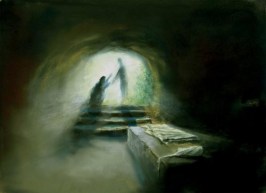 One of the biggest obstacles to a proper understanding of the Gospel is pride. It is the DNA of our fallen human nature apart from God. And pride can be found most evidently in religious people. The Pharisees were the perfect example of this. They were self righteous and morally upright, at least that was the case externally. Sin to the religious Pharisees was defined by what a person did rather than who they are.
The religious leaders of the 1st century were very good at keeping rules and stringent to adhere closely to the laws of Moses. Their external obedience was impeccable. And they prided themselves on their works while at the same time turning their noses upward towards anyone who was unable to external clean their lives up.
“Woe to you, scribes and Pharisees, hypocrites! For you are like whitewashed tombs, which outwardly appear beautiful, but within are full of dead people’s bones and all uncleanness.” Matthew 23:27.
The issue was not external but internal. And even today, the issue is not that we have sinned against God, it is that we’ve never done anything but sin. We are sinners not because of what we’ve done. We are sinners because of who we are. Our hearts are corrupted. And this corruption infects every area of our being.
The heart is deceitful above all things, and desperately sick; who can understand it?Jeremiah 17:9.
How can a corrupt, morally bankrupt heart make itself choose things that are pure? A supernaturally work must be done.
Our human pride is largest stumbling block within the church to understanding the magnificent grace of God and it is the same malady that consumed the Pharisees. I am sad to say that I embraced pride in this area for years. The Pharisees didn’t want to see themselves as being depraved they truly were. Jesus pointed out their spiritual deadness and condemnation before God constantly. And they crucified Him for it.
Currently, our church is going through the book of Ephesians verse by verse. And we are approaching a passage of scripture in Ephesians 2 that will provoke one of two reactions within the human heart. The first reaction to the words of Paul in Ephesians 2 could be offense spawned by pride much like the Pharisees. The second and proper reaction is a brokenness of who were followed by a gratefulness for who Christ is.
Before we can fully understand the good news of the Gospel, we must come to terms with the bad news. Paul opens Ephesians 2 with the bad news. He pulls no punches, and holds nothing back in describing fallen man without Christ.
“And you were dead in the trespasses and sins in which you once walked, following the course of this world, following the prince of the power of the air, the spirit that is now at work in the sons of disobedience” Ephesians 2:1.
Paul did not say that the sinner was “hindered” in his trespasses. Paul did not say the sinner was “struggling to overcome” his trespasses. Paul said that you and I were dead in them. In this state of spiritual death described in Ephesians 2:1, notice what we are dead towards. We have the ability to follow the course of this world. And we have the ability to follow the temptations of Satan. We are alive to the flesh. But we are dead to Christ and incapable of making ourselves alive to him. To be dead in trespasses is to be unable to overcome them.
Many believers begin to swell up with pride at a verse such as this. The natural inclination is to bend the verse as to make us not quite as bad as Paul portrays us. I have heard people say things like “Yes, we are spiritually dead UNTIL we accept Jesus.” But dead is dead. And to my knowledge, dead people can’t accept or do anything. They are without hope. In the flesh, we are alive to the things of this world and dead to the understanding or even seeking of the spirit of God.
“The natural person does not accept the things of the Spirit of God, for they are folly to him, and he is not able to understand them because they are spiritually discerned.” 1 Corinthians 2:14.
The preacher does not give understanding to people. God through His spoken word brings understanding and life. It is impossible to understand the ways of God unless God brings a person first out of spiritual deadness. Ezekiel 37 embodies this concept, where God tells Ezekiel to speak to the dead bones, and through the spoken word of God, the Lord gives the bones life.
Just a side note for us preachers, if we do not ascribe this new life being given to sinners wholly to God, then we are liable to take credit for supernatural things that we had no part in. Namely, the conversion of sinners in our congregations when it was actually God’s work, not ours.
“None is righteous, no, not one; no one understands; no one seeks for God. All have turned aside; together they have become worthless; no one does good, not even one.”Romans 3:11-12.
Outside of faith in Christ, we are dead in our sins. It’s not merely that the sinner won’t come to Christ. They cannot come.
“For the mind that is set on the flesh is hostile to God, for it does not submit to God’s law; indeed, it cannot.” Romans 8:7.
Reading the verse above, if it is true (as some would say) that we are dead in our sins (which is to have a mind set on the flesh) until we make the decision to follow Christ, that would mean that our fleshly mind would have to eventually submit to God. However, the text above in Romans says that the mind set on the flesh (which described us all at one point) cannot submit to God. So if we believe the Bible, and the text is true that we are unable to submit to God in our sinful flesh, how is it that we are saved?
“But God, being rich in mercy, because of the great love with which he loved us, even when we were dead in our trespasses, made us alive together with Christ—by grace you have been saved” Ephesians 2:4-5.
Who made us alive? Who brought us back from death? Yes, we must make the decision to put sin aside and follow Christ. But ultimately, who is responsible for enabling us to make a decision like this which Paul has specifically said we are dead and unable to do it?
We see only the external actions of a person putting the flesh aside and submitting to Christ. We see the hand go up in repentance. We see the march down the aisle to talk to the preacher. We see the person changing their way of life and beginning to follow Jesus. These things are what we see externally.
But we are unable to see the workings of the Spirit. And because of this, we often deny the workings of the Spirit and the depravity of man. A fellow once told me that he was saved because he decided to follow Jesus in the pew and then proceeded to walk down the aisle in new life. And I told him that the only reason he was able to decide to follow Jesus and walk in new life is because God had already regenerated His heart and saved him in his seat prior to his decision.
Recently I wrote a blog about the irresistible grace of God. Many times irresistible grace can be mistaken for robotic programming. But we are not robots awaiting God to just reprogram us to follow Him. God created man being perfect. And due to the fall of Adam, the whole human race was infected with this sin nature. It changed us into what we are. We are not robots, we are sick with sin that has killed us spiritually. And due to this sickness we naturally do not have a taste or desire for God.
Think about a food that you really like. I love pizza. Just the smell of melted mozzarella cheese combined with pepperoni will make my mouth begin to water. I remember a while back I had a terrible stomach virus. My wife Lacy had ordered pizza for the boys dinner that night. As I lay in bed feeling horribly ill, one my boys brought me a slice of pizza. The smell of the pizza nauseated me and just the thought of taking a bite made me want to vomit. I normally would have devoured this pizza, but the sickness made me want to avoid it like the plague.
Our condition is much worse. Again, we are not just sick with sin, we are dead in it. And when God opens the eyes and brings a once spiritually dead person back to life, he immediately begins to hunger for God and disdain sin. Did God make this person a robot. Absolutely not. God cured him of his mortal sickness and freed him to enjoy the pleasures of God that he was created for. Jesus literally resurrects us from dead to breath new life.
“I am the resurrection and the life.” John 11:25.
We have no way of understanding the depths of that verse if we do not believe that we were once inescapably dead in our sins and that God is the one who is the catalyst of our choosing to follow Him in new life. We are not just sick in sin and in need of intellectually making the right choice. We’re dead and without hope. And in this death, we did not resurrect ourselves. Jesus will not give us a congratulations for our right decision when we get to Heaven. We will be thanking Him for bringing us out of death.
The only way we can live spiritually is if we have been resurrected and given new life through the indwelling Spirit of Christ. He is the resurrection of our souls and the life within us.
In the opening of Ephesians, Paul gives thanks to God for the faithfulness of the church in Ephesus.
“For this reason, because I have heard of your faith in the Lord Jesus and your love toward all the saints, I do not cease to give thanks for you” Ephesians 1:15-16.
If we are the activating agent in our faith, why does Paul thank God for the faith they have? If they were faithful due to finally getting their act together, then why doesn’t Paul thank them? Paul thanks God because He marvels at the amazing spiritual resurrection that Christ has performed in their lives.
We read scriptures like Ephesians 2 in our churches, and we sing hymns with words like “Amazing Grace, how sweet the sound that saved a wretch like me, I once was lost but now Im found was blind but now I see.” Yet at the same time in doing these things, our human nature fights against what is actually being said.
Consider the words of the hymn “Amazing Grace” and what is being communicated. I am a wretch of a person. I was lost. I did not find Jesus, He found me. My vision to see Him was not blurry or obstructed. I was totally blind. But He gave me life. He opened my eyes and gave me sight where there once were only dead eyes. He pulled me out of the darkness and into the light.
This reality of who we are is offensive. We are wretched, we are spiritually dead, and we are in our flesh, hostile to the things of God. And if we let pride seep in we will inevitably miss out on reveling in the joy of the Lord.
When I realized the depths of my own spiritual inability and depravity, my first reaction was denial. Proudly in my mind, I went over a checklist of the things I had done to justify myself before God. But when it truly set in, I was broken. I was humbled. I was brought to tears and placed on my knees in utter shame. And from their, a thankfulness that I had never experienced before flooded my soul. And I saw a God that truly has the power of resurrection in all areas of life.
The final words of the great preacher Dr. Martyn Lloyd Jones on his death-bed ring heavy in my heart. Lloyd Jones said as he drew his final breaths, “I am a great sinner. But Christ is an even greater savior.” This is the Gospel truth. This is the bad news and good news all in one. And it should fill our hearts with gratitude.
Is The Grace of God Irresistible?
 No Christian would ever deny that God gives grace to sinners. Even the least studied among us would affirm the grace of God. We read about God’s grace in the scriptures, we sing about God’s grace in our hymns, and we praise God for His abundant grace in our prayers. The grace of God is central to our Christian faith.
The disagreements over grace arise not in its existence, but in its application. The question that is most often debated regarding grace is over its supernatural potency. Is the grace of God in salvation irresistible to man? Or do we have the power resist God and thwart His attempts to save?
“I know that you can do all things, and that no purpose of yours can be thwarted.” Job 42:2.
Clearly, the scriptures state that no one can thwart the purposes of God. To even think that we could have that kind of power over God is to place ourselves on the throne and put God at our mercy. But in order to adequately and rightly answer this question, scripture must be our guide and opinions must go out the window. Also, as to not merely take one scripture and try to make a point, we will go to a few differing texts to see how the whole of scripture speaks to this issue.
Scripture shows plenty of incidents of where man is resistant to the grace of God.
“And do not grieve the Holy Spirit of God, by whom you were sealed for the day of redemption.” Ephesians 4:30.
“You stiff-necked people, uncircumcised in heart and ears, you always resist the Holy Spirit. As your fathers did, so do you.” Acts 7:51.
“Because they were rebellious against His Spirit, He spoke rashly with his lips.” Psalm 106:33.
There are also plenty of verses that speak to the fact that the calling of God upon the life of a man is irresistible.
“No one can come to me unless the Father who sent me draws him. And I will raise him up on the last day.” John 6:44.
“All that the Father gives me will come to me, and whoever comes to me I will never cast out.” John 6:37.
“I give them eternal life, and they shall never perish; no one will snatch them out of my hand.” John 10:28.
So which is it? Is the scripture in contradiction to itself? Do some verses claim that God’s grace is indeed irresistible while others elevate man’s ability to deny God? 2 Chronicles helps us reconcile this issue and shows that the Bible is not at all in contradiction to itself.
In 2 Chronicles, King Hezekiah wrote letters to all of Israel, Judah, Ephraim and Manasseh, calling people of these lands to repentance and for them to return to the Lord from whom they had rebelled. He gave the letters to couriers for them to deliver. Here is the account.
“So couriers went throughout all Israel and Judah with letters from the king and his princes, as the king had commanded, saying, “O people of Israel, return to the LORD, the God of Abraham, Isaac, and Israel, that he may turn again to the remnant of you who have escaped from the hand of the kings of Assyria. Do not be like your fathers and your brothers, who were faithless to the LORD God of their fathers, so that he made them a desolation, as you see. Do not now be stiff-necked as your fathers were, but yield yourselves to the LORD and come to his sanctuary, which he has consecrated forever, and serve the LORD your God, that his fierce anger may turn away from you. For if you return to the LORD, your brothers and your children will find compassion with their captors and return to this land. For the LORD your God is gracious and merciful and will not turn away his face from you, if you return to him.” 2 Chronicles 30:6-9.
The Gospel calling has gone out through the pleas of King Hezekiah. Now notice the response of the people.
“So the couriers went from city to city through the country of Ephraim and Manasseh, and as far as Zebulun, but they laughed them to scorn and mocked them.” 2 Chronicles 30:10.
It appears to be an open and shut case. Apparently the people resisted this calling of God through Hezekiah. It would seem that man possesses the power to thwart the plans of God to save. But lets continue reading;
“However, some men of Asher, of Manasseh, and of Zebulun humbled themselves and came to Jerusalem. The hand of God was also on Judah to give them one heart to do what the king and the princes commanded by the word of the LORD.” 2 Chronicles 30-11-12.
The text says that there were some men from Manasseh and Zebulun who responded to the call of the Lord. Now notice the next sentence of the verse. It begins by saying, “The hand of God was also on Judah…” This word “also” immediately implies that God’s hand was upon these few men in Manasseh, Zebulun, and Judah. What was the purpose for God’s hand being upon these few men from these cities that repented?
“The hand of God was also on Judah to give them one heart to do what the king and the princes commanded by the word of the LORD.”
Who is the “them” in this verse that God gave one heart to? Obviously it is certain men in the cities. What was the purpose for God giving them one heart? So that they would follow obediently the call of King Hezekiah and return to the Lord. Ezekiel describes is greater detail what had just taken place.
“And I will give you a new heart, and a new spirit I will put within you. And I will remove the heart of stone from your flesh and give you a heart of flesh. And I will put my Spirit within you, and cause you to walk in my statutes and be careful to obey my rules.” Ezekiel 36:26-27.
It is undeniable that man can and will resist the drawing of the Holy Spirit. However, God has a leash and will let sinful man run for a time. But when God determines that enough is enough, He reveals Christ to the heart of that man, opening his eyes and irresistibly drawing him in.
“But when God, who had set me apart even from my mother’s womb and called me through His grace, was pleased to reveal His Son in me so that I might preach Him among the Gentiles,” Galatians 1:15-16.
God chose and set Paul apart to be His when He was in the womb. Paul went on from his youth to live a very religious life, but He hated Christians and denied Jesus to be the Messiah. He was a murderer of God’s people, and had nothing but rage in his heart towards anyone that would profess Christ as Lord.
It was not until his infamous trip to Damascus that Christ chose to reveal Himself truly to Paul. Jesus did not ask Paul to follow Him or beg him to repent. Jesus blinded Paul and then gave Him marching orders basically saying that Paul was now working for Him.
So the question is, “Why didn’t God just reveal Himself to Paul right out of the womb?” To answer this question, read these accounts of what Paul says about Himself after his conversion.
“For you have heard of my former life in Judaism, how I persecuted the church of God violently and tried to destroy it. And I was advancing in Judaism beyond many of my own age among my people, so extremely zealous was I for the traditions of my fathers.” Galatians 1:13-14.
“For I am the least of the apostles, unworthy to be called an apostle, because I persecuted the church of God. But by the grace of God I am what I am, and his grace toward me was not in vain.” 1 Corinthians 15:9-10.
God let a man like Paul run in His sin nature for a time so that upon His eyes being opened to the irresistible Christ, he would truly understand the meaning of grace. Now a new man in Christ, Paul looks back upon his former life with utter humility and shame and a newfound deep thankfulness and appreciate for the grace of God in and upon his life. Paul understands that although he heard the Gospel calling, in his flesh he was by nature hostile towards that call and dead to its drawing.
In our fallen nature, we are a stiff necked people. We are rebellious to God. And we want no part of understanding or even seeking Him (Romans 3). The Bible calls our fallen nature being “Spirtually Dead.” But God is able to overcome death. He is the resurrection of our dead souls, and He is the bringer of new life. His resurrection on the cross was also a divine pointer to Him being the resurrection of our souls.
“For as the Father raises the dead and gives them life, so also the Son gives life to whom he will.” John 15:21.
If you have a testimony of a former life in which you rebelled against God, it is not that you had power over the calling of God, but rather that He had not deemed it time. There is a general calling, to which all the world hears the calling of God through the Gospel. And then there is the effectual call, to which God opens the eyes of those whom He chose to lavish grace upon, and draws them to Himself.
“For many are called, but few are chosen.” Matthew 22:14.
God does not cause, but allows us to run in our sin nature for a time. And after regeneration in Christ, we then look back upon our former life and can see our right condemnation as undeserved sinners before a Holy God. Only in mourning over our depravity can we truly marvel in the grace of God. And this amazing grace of God is truly irresistible.
“And you were dead in the trespasses and sins in which you once walked, following the course of this world, following the prince of the power of the air, the spirit that is now at work in the sons of disobedience— among whom we all once lived in the passions of our flesh, carrying out the desires of the body and the mind, and were by nature children of wrath, like the rest of mankind. But God, being rich in mercy, because of the great love with which he loved us, even when we were dead in our trespasses, made us alive together with Christ—by grace you have been saved” Ephesians 2:1-6.
Three False Statements Made During Easter
 We live in a consumerist culture at large. Everything in life is based on our personal preferences. Naturally, we go shopping at the stores that cater to our individual sense of fashion. We go to the restaurants that provide that food choices that tantalize our taste buds. And your vacation of choice depends on whether or not you’re a beach or a mountain person. Our personal preferences determine our path in life.
Unfortunately, this social norm even extends into how culture relates to God. It is not that our nation is hardened to the Gospel so much as it is that it is ignorant to the true Gospel. And during the Easter season, false teachers begin to unapologetically wave their flags. In attempts to “recruit” and appeal to the consumerist nature of the masses, these wolves in sheep’s clothing begin to preach a Gospel that is appealing to the flesh. They twist the Word of God in order to tickle the ears of their hearers, but they do not preach truth.
“Beware of false prophets, who come to you in sheep’s clothing but inwardly are ravenous wolves.” Matthew 7:15.
Here are a few very common statements that I have heard from the mouths of certain pastors during the Easter season. These statements are appealing to the ears, but absolutely detrimental to the heart of their listeners.
1.) The Cross is About Forgiveness and Love, Not Wrath
It amazes me how many preachers in our day will so easily preach on the love of God and blatantly deny the wrath of God. They will say that Jesus death on the cross was all about forgiveness and it has nothing to do with wrath.
But if that is true, what were we saved from? Some would answer by saying, “We were saved from sin.” But sin was never out to get us. Rather, sin is who we are. And because of our sin nature inherited from Adam, we are criminals against a Holy God. In our sins, we are all under what Paul described in Galatians 3 as being a curse. And in Galatians 3, Paul goes on to say that every person under a curse deserves to hang on a tree. This was a first century description of crucifixion.
We are under the curse of the law. It was not merely forgiveness that we needed. We needed a savior.
“But Christ has rescued us from the curse pronounced by the law. When he was hung on the cross, he took upon himself the curse for our wrongdoing. For it is written in the Scriptures, “Cursed is everyone who is hung on a tree.” Galatians 3:13.
If you have sinned even once in your life, according to Paul, the law of God brings to light our right condemnation before God. And we deserve nothing more than a criminal’s death. It’s ironic how so many people have the Ten Commandments hanging in their homes in the hopes of portraying to others that they are Godly people. When in all actuality, the law is a mirror that shows our total depravity. I believe it to be a good thing to have the commandments in our homes in order to remind us of our total dependence on Christ.
So the question is, “What were we saved from.” Again, some pastors will say God saved us from sin. But why would we need saving from sin? Because the wrath of God abides on all of the unrighteous. God saved us from Himself.
“For the wrath of God is revealed from heaven against all ungodliness and unrighteousness of men, who by their unrighteousness suppress the truth.” Romans 1:18.
Yes, the cross was the ultimate display of love and forgiveness. But there cannot be forgiveness without an offense. And every offense must be punished. God cannot let sin go unpunished or He would prove Himself to be unjust.
Imagine someone had murdered one of your loved ones. The police catch this criminal and place him before a judge for his sentencing. But instead of rightly punishing him, the judge just decides to forgive and let him go free. Would you feel like justice had been served? Would you see that judge as being righteous and fair? No. Rather, that judge would be seen as evil and corrupt.
We serve a God who is both just and Holy. God could not simply forgive sinners without a price being paid for the crime.
“But when the fullness of time had come, God sent forth his Son, born of woman, born under the law, to redeem those who were under the law, so that we might receive adoption as sons.” Galatians 4:4-5.
God sent His Son, born of a woman and made in the likeness of men to be the substitute of sinful man. The sins of the world were then imputed to Christ, and His perfect record was placed upon us who now believe. Isaiah says that it pleased God to crush the Son in our place. It was God who killed Jesus, His only son, for us. The crucifixion was necessary to save us from the wrath of God that once was upon us.
Without acknowledging the wrath of God, it is impossible to understand forgiveness, and the love of God. Without the acknowledgement of the wrath of God, we down play the death of Jesus, and leave the question of why we need forgiveness without an answer. Without understanding that we were once children of wrath paints God as unjust as us as entitled creatures.
“For our sake he made him to be sin who knew no sin, so that in him we might become the righteousness of God.” 2 Corinthians 5:21.
2.) There Was No Need For Blood Atonement
This is another false statement that I have heard made during Easter. The sacrifice of Christ brings to mind imagery of old testament animal sacrifice for sins. Particularly on the Day of Atonement, the priest would sacrifice a sheep, symbolically placing the sins of the nation upon the animal.
One pastor recently said to his congregation on Easter weekend, “Blood sacrifices in the Old Testament were never required from God, they were designed by fallen man.” Now it is true that Moses wrote the books of the law, specifically those like Leviticus and Numbers which speak into how the sacrifices of the Old Testament were to be prepared. But who told Moses how to do the sacrifices? For example, in Numbers 28 it gives a list of how to prepare certain animal sacrifices, and the chapter begins with “The Lord said…” It was God who commanded animal sacrifice.
“For it is impossible for the blood of bulls and goats to take away sins.” Hebrews 10:4.
God’s command for sacrifice was never in order for man to take away His own sin, but rather to point to the true sacrifice for all sin that was coming in Christ. The Lord even said this through Isaiah.
“What to me is the multitude of your sacrifices? says the LORD; I have had enough of burnt offerings of rams and the fat of well-fed beasts; I do not delight in the blood of bulls, or of lambs, or of goats.” Isaiah 1:11.
God is saying through Isaiah that it’s not about merely bulls and goats and external actions. But rather, the sacrificial system was pointing towards a day when all sins would truly be washed away and be made white as snow through the death of Christ.
“Come now, let us reason together, says the LORD: though your sins are like scarlet, they shall be as white as snow; though they are red like crimson, they shall become like wool.” Isaiah 1:18.
The sacrificial system was created and ordained by God, not man. And it pointed to Jesus. To say that the sacrificial laws were not of God is to deny the divine aspect of God’s infallible word as well as His providence over all things.
3.) God Can Have Fellowship With Sin
This is another heretical doctrine that many preachers will proclaim. One pastor said to his congregation that to say that God cannot tolerate wrong doing is a misinterpretation of scripture. And he drew his conclusion from the book of Habakkuk.
“Your eyes are too pure to look on evil; you cannot tolerate wrongdoing. Why then do you tolerate the treacherous?” Habakkuk 1:13.
This preacher claimed that although the scripture begins by saying that the Lord cannot look on evil, Habakkuk asks the question, “Yet why do you do it?” Therefore, this preacher deducted that God can indeed tolerate evil because of Habakkuk’s question. However, Habakkuk, much like this preacher, was confused. Habakkuk saw all of this rebellion towards God going on in His day and mistook it for God tolerating wrong doing. But context is everything.
If you continue to read Habakkuk, you will see God’s response. God says to Habakkuk that he is not tolerating sin. In fact, God is actually sending the Babylonians, who were know to be a cruel and violent people, to slaughter all of those in the nation that were rebelling against God. God was never tolerating or having fellowship with sin. He was unleashing His wrath. Only those who trusted in the Messiah to come, the Christ, were spared from the wrath of God.
Jesus death was necessary for this Holy God to have fellowship with sinful man. For the redeemed, God does not look upon them and see their right decision to follow Him, or their works to serve Him. Because all of their right decisions and works are as filthy rags, tainted by their sin. But in Christ, the Lord now sees the blood of His perfect Son covering us. God sees His Son in us. Jesus is our only redeeming quality before God. Because God cannot fellowship with sin. We desperately need the blood of Christ.
Sadly, this denial of the Holiness of God is rampant in our world today as man attempts to make God more like himself, and deny his depraved state. Moses could not look upon the Holiness of God lest he die. Isaiah wailed upon seeing the train of the Lord in a vision and thought he was going to die. These are the Biblical images of those who only glimpsed the fringes of our Holy God. And Christ is our mediator.
Easter is not a time to feel sorry for Jesus, but rather it is a time to feel sorry over our sin. It is a time to celebrate the freedom only He could bring through His death on the cross. It is a time to exalt Him as we are humbled in His presence. In Christ alone, our hope is found.
The Greatest Need of the Church
 When I was twelve years old, I was determined that I was going to be a professional skateboarder. I had received a brand new skateboard for my birthday and could successfully ride down my driveway without falling, so in my mind I was totally qualified. To begin my training, I decided that I should skate down the steepest hill in the neighborhood. I pushed off and began my descent down the hill. The acceleration of the board took me by surprise and suddenly fear replaced what was once courage.
Almost halfway down the hill, I lost my balance and took a bad fall. When I stood up I noticed I could not use my right hand. The possibility of a broken bone did cross my mind, but I really didn’t want that to be the case. So I decided to not tell my parents about it and try to heal on my own. I tried icing my wrist where most of the pain resided. But it was to no avail. The pain didn’t go away, it actually got worse. I then thought maybe pressure would help, so I wrapped my wrist tightly. Again, this did nothing but mummify the issue. I took aspirin and even holding my wrist upright to elevate it, but all these were failed attempts.
Finally, I gave in and told my parents about my accident. And they took me straight to the hospital. Upon the doctor’s examination it was confirmed immediately, I had a broken wrist. I had been attempting to deal with the effects of the issue of my broken wrist, such as pain and swelling. But I had neglected to go to the root of the problem, that being my broken bone, which was the issue that all the other symptoms stemmed from.
Much in the same manner, many times the church tries to deal with symptoms of a greater issue without tending to the issue itself. Preachers will stand in pulpits and say, “If our world just wasnt so sexually immoral…” and then they will preach a sermon against sexual immorality. Or they may hold a conference on marriage and say, “If only husbands and wives would treat one another better….” and then preach a sermon on loving our spouses.
This is not altogether a bad thing. But many times, preaching a sermon like this can be much like breaking a bone and trying to heal it by applying ice. There is a much greater problem that is not being addressed.
You can tell a pig to stop wallowing in mud, but it would do absolutely no good. Why? Because it’s a pig, and wallowing in mud is in its nature. In the same way, you can tell a spiritually dead sinner that they need to stop sinning and it will do absolutely no good. Why? Because due to the fall of Adam, it is our nature to sin. It’s who we are, and without Christ, sin is what we gravitate towards much like a pig is drawn to mud.
“All of us used to live that way, following the passionate desires and inclinations of our sinful nature. By our very nature we were subject to God’s anger, just like everyone else.” Ephesians 2:3.
When a person is in physical pain, the first step is not to address the symptoms of pain, but rather determine what the source of the pain is. And when a person is in sin, the first step is not to address the sin, but the source of the sin nature. So the question we must ask is, “Why do people sin?” People sin because they don’t know God. And because they don’t know God, they have not been transformed by God into that 1 Corinthians 5:17 new creation.
The greatest need of the modern-day church is a proper knowledge of God. One of the most neglected studies in evangelicalism today is the Doctrine of God or Theology Proper. It begs the questions, Who is God? What are His divine attributes? What are His characteristics, such as His sovereignty, His omniscience, His immutability, His Holiness, His love, and His wrath? It is only through the study of the attributes of God that a man can properly understand Himself. And only through knowing God intimately can our eyes truly be opened to the depths of our sin nature.
A lack of the knowledge of God is the source from which all sins stem from.
“My people are destroyed for lack of knowledge; because you have rejected knowledge, I reject you from being a priest to me. And since you have forgotten the law of your God, I also will forget your children.” Hosea 4:6.
The implications of this verse are staggering. A man who rejects the knowledge of God is doomed to create a golden calf. He is destined to formulate an image of God based on who he thinks God should be. A man who rejects to seek the knowledge of God may be moral in the worlds eyes, but he will be disqualified from being a priest. This is seen predominately with prosperity preachers today who preach the false message of health and wealth tied to obedience. They proclaim a message that is void of the Holy Spirit, because they are not God’s priests.
In the same way, a man who preaches the love and God and never touches the subject of the wrath of God is disqualified from being a priest to the Lord. Because God’s wrath and His love and inseparable. It is impossible to understand the love of God unless you first understand the justice and wrath of God.
In our house, we preach the law of God to our children constantly. Not to encourage them to live up to the perfect standard of the law, although we do instill in them to strive towards that. Rather, we preach the law of God to our children to show them that they can’t live up to it. They are incapable of keeping even one of His laws perfectly. And the penalty for breaking even one of God’s laws just one time is death.
We preach the law of God in order to point out to our children that they are in desperate need of a savior. They are in desperate need of the one who can perfectly live up to the high standard of God’s law. We are all in need of a perfect substitute who can take our rightfully deserved punishment and impute to us His perfect record. We are in desperate need of Jesus Christ.
Unless we teach our children of their inability and guilty standing through the law of God as well as teach them to know the Lord through studying His divine attributes, they will never truly know Him. In order to shepard our families, we first must be seekers of God.
“But those who wish to boast should boast in this alone: that they truly know me and understand that I am the LORD who demonstrates unfailing love and who brings justice and righteousness to the earth, and that I delight in these things. I, the LORD, have spoken!” Jeremiah 9:24.
The greatest and most lofty study a man can embark upon is seeking to know His creator. Knowing God takes being totally willing to set aside all preconceived notions of what we may have previously thought God to be like, or what we would like God to be like, and simply submitting ourselves to scripture alone and surrendering to the Word of God. But why is it that so few people in our day and age lack a true knowledge of God? Why is it that people would rather hear about their ability to clean themselves up before coming to God and be totally angered by the idea of a sovereign savior?
Simply put, most people prefer a God who is omniscient but not sovereign. We want a God who is all-knowing, but incapable actually saving anyone unless they are properly convinced to change. Because if we have a God who is omniscient yet not sovereign, then we can wield His power and God is at the mercy of our decisions.
But if we serve a God who is both omniscient and sovereign, we are totally and utterly at His mercy as well as dependant upon Him. And this accurate depiction of our Lord is too scary for many to come to terms with. So they end up forming an image of God in their minds that they are more at ease with. In essence, the masses do not want to serve a God that provokes fear in them. And because of this, they forfeit attaining Godly wisdom.
“The fear of the Lord is the beginning of knowledge;” Proverbs 1:7.
Why does humanity practice sin? Because they do not accurately know the Living God.
What is source of our sin? A lack of the knowledge of God.
Where does knowledge begin? With a proper fear of the Lord.
A.W. Tozer said, “I am convinced that the lack of great Saints in this day is due at least in part, to our unwillingness to give sufficient time to the cultivation of the Knowledge of God.”
If a man accurately fears and knows the Lord, then he will treat His spouse as Christ does His church. If a man accurately fears and knows the Lord, He will desire Holiness more than the sins of His past. If a man accurately fears and knows the Lord, seek to be more like His savior than seeking after the ways of the world. Preaching behavioral modification to people with a sin nature is futile. But preaching Christ, along with His divine attributes will expose man for the wretch that he is, and point Him to the beauty of the Lord through truly understanding the riches of His mercy and grace.
There is no greater study than the attributes of God. Below I have links to some great resources for your personal study on the Doctrine of God.
Knowing The Living God by Paul Washer
The Attributes of God by A.W. Tozer
The Attributes of God by A.W. Pink
The Mystery of Election
 You will never uncovered buried treasures by skimming the surface of a field. Digging must take place.
This requires work on the part of the seeker. Not everyone has the patience or the determination to put into the task. But to those who persevere in the hard work, they will reap the rewards of finding the riches. The same holds true of mans search of God though His word. Those who take a lazy approach to the scriptures, never digging for themselves and laboring over the text, will never experience the Lord in a deep, meaningful way. As Luke wrote, there is a treasure in the field to be found that is the Lord, but only dedicated seekers of truth will find Him.
“You will seek me and find me, when you seek me with all your heart.” Jeremiah 29:13.
To truly find a treasure, one must put aside all opinions of where they think the treasure is, and submit to the map. Ultimately, it matters not where we think the treasure should be. It will only be found upon looking to the blueprint of the one who buried it.
In the same way, when we come to a text of scripture with preconceived notions of how we think God should operate, we do exactly what the Israelites did in the Exodus. We mold for ourselves an image suitable to our likings. We create a golden calf to worship instead of the God of the Bible. When we refuse to submit to the scriptures, we in essence are telling God that He is wrong and we know better.
“For my thoughts are not your thoughts, neither are your ways my ways, declares the LORD.” Isaiah 55:8.
Recently our church has embarked on a treasure hunt. Our field is the book of Ephesians. And immediately, the Apostle Paul dives into one of the deepest and most debated areas of theology, the sovereign grace of God in the salvation of a believer. Paul pulls no punches in telling believers who they are in Christ. The depths of the riches we have through the grace of God is immeasurable. However, in order to truly savor and understand the depths of these riches through grace, digging must take place. We cannot simply skim over the text and apply to it what we think or desire it to mean.
It was C.S. Lewis who once said, “A lion does not need to be defended. It must simply be let loose.” Let the animal roar and it can defend itself. In the same way, I believe that the Bible needs no help in defending itself. The Bible must be interpreted as a whole. In other words, we must let scripture interpret scripture. It is a dangerous thing to approach a portion of scripture and attempt to interpret it without considering other parts of the Bible. This is our game plan in approaching Ephesians. We will let the Lion of God’s word loose, and stand in awe as it roars.
This past Sunday, we continued our dig into the book of Ephesians and struck a doctrinal gold mine. So rich and weighty was the text. But because of the weightiness of what was said by Paul, some digging has to be done. In it, Paul begins to expound on the inner workings of the amazing grace of God.
“….even as he chose us in him before the foundation of the world, that we should be holy and blameless before him. In love he predestined us for adoption as sons through Jesus Christ, according to the purpose of his will, to the praise of his glorious grace, with which he has blessed us in the Beloved.” Ephesians 1:4-6.
These verses contain a portion of the doctrines of grace. This is the doctrine of divine election. And this doctrine is one of the most scandalous and ignored teachings in all of scripture. I once heard of a pastor who was preaching through the book of Ephesians who decided it best to skip over this passage as to not risk offending his hearers. But the Gospel is offensive. At least to our fallen sinful flesh. And if we are true seekers with Christ as our goal, there should be no stone left unturned. Because sometimes, under the heaviest of stones lies the richest of treasures.
Consider Jesus teaching on the new birth in the book of John. Think of the phrase “born again.” Did you cause yourself to be born the first time? Absolutely not. Then why would we think we could cause a second birth? The truth of God being the one who chooses and humanity having no part in the regeneration process is screamed through the scriptures.
Deuteronomy 7:6 “For you are a people holy to the LORD your God. The LORD your God has chosen you to be a people for his treasured possession, out of all the peoples who are on the face of the earth.”
John 15:16 “You did not choose me, but I chose you.”
John 15:19 “If you were of the world, the world would love you as its own; but because you are not of the world, but I chose you out of the world, therefore the world hates you.”
Acts 13:48 “And when the Gentiles heard this, they began rejoicing and glorifying the word of the Lord, and as many as were appointed to eternal life believed.”
Pertaining to the above verse in Acts 13, Pastor Steven Lawson said it best in question and answer form;
“Which comes first – believing or being appointed to eternal life? There is no getting around it, first there is the appointment to eternal life, and then there is the belief. There is a cause and effect relationship. The cause is the secret and unseen heavenly, eternal decree of God – the setting of an appointment; the effect is what is observed on the earth – the people responding in faith to the gospel. The cause of our salvation is the appointment by God; the effect is the exercise of faith by man.” -Steven Lawson.
Much of the evangelical world has deemed this doctrine too heavy. And in order to lighten the load, they’ve begun to chip away at it with man made tools of interpretation. In order to make God more like us, humanity has distorted the doctrines of grace and made the grace of God dependant on the actions of man. But when grace begins to be seen as a reward for something we do, we lose the definition of grace immediately.
Grace by definition is a gift that is unearned and undeserved. Many times when my kids cross the line or break our house rules, we will sit them down and show mercy. “You broke this rule, but because I love you, we are not going to punish you this time.” We let them off the hook without their deserved punishment. Not because of anything they did, but because of our love for them.
God owes us nothing. We are not deserving in any way of God’s grace let alone salvation. Paul wrote in Galatians 3 that all mankind was under the curse of the law if they broke even one of God’s commands. The standard for salvation is not merely to be a good person and try your best. God’s standard for mans salvation is perfection. And because of the fall of Adam, we have inherited his sin nature and all fall extremely short. We are the criminals in the story. We are the cowboys with the black hats. By nature we are enemies of God and deserving of His Holy wrath.
“…among whom we all once lived in the passions of our flesh, carrying out the desires of the body and the mind, and were by nature children of wrath, like the rest of mankind.” Ephesians 2:3-5.
Our salvation was not activated when we “decided” to follow Jesus. And Jesus never needed us to “Accept” Him, because it is we who desperately need His acceptance. Rather Paul writers in Ephesians that it was God that chose us before the foundation of the world. To understand this supernatural phenomenon takes setting aside our fleshly preconceived notions.
I’ve heard many Christians ascribe to the fact that God chooses us, but they would say that God’s choice is based on Him looking down the tunnel of time to see who would choose Him, and upon seeing their right action, He in turn chooses them. Basically saying that the grace of God is activated first by a human decision.
But there are many problems with this interpretation of God’s choice. For starters, it completely disregards the meaning of grace as being something that cannot be earned and is not deserved. In saying we have “accepted or decided” to follow Jesus, we turn grace into something that is earned and deserved. Secondly it strips God of His sovereignty and makes us the sovereign agent in salvation. And thirdly, to say that Gods choice is determined by Him looking down the tunnel of time before the foundation of the world to see what choice the sinner would make is in complete denial of the omniscience of God as being all-knowing. Our Lord has never learned any new information, because He determined every aspect of existence before the foundation of the world.
Common text many will use to fight against this doctrine of Gods sovereign choice in election are verses like John 3:16. “For God so loved the world that He gave His only begotton Son, that whosoever shall believe in Him should not Perish, but have everlasting life.”
The key word in this text is the word “World.” The question is, “What did Christ mean by “the world?” In any attempt to deny the sovereignty of God, many will say the world means every person in the world. But the problem with that is the book of John as a whole. In order to rightly interpret scripture, the reader cannot rip a scripture out and interpret it without filtering it through the book as a whole.
For example, in John 17:9, Jesus says, “I am praying for them. I am not praying for the world but for those whom you have given me, for they are yours.”
Here Jesus defined what He meant by “the world.” Not every person, but those the Father had given Him out of the world. In essence, the world of believers. Also in John 3:16, the word “whosoever.” That word literally means “whoever those believers are. Jew, Gentile, black, white, male, female. The whosoever is whomever the Father had chosen before the foundation of the world.
Another often misinterpreted verse used to dismiss the doctrine of God’s sovereign grace is 2 Peter 3:2. “The Lord is not slow to fulfill his promise as some count slowness, but is patient toward you, not wishing that any should perish, but that all should reach repentance.”
God takes no pleasure in the destruction of the wicked. But in this verse of 2 Peter, Peter is writing to the elect of God, the church. “To those who have obtained a faith of equal standing with ours by the righteousness of our God and Savior Jesus Christ:” So in the context of the letter as a whole, Peter is talking about Gods patience towards His chosen people. We cannot apply the letter of 2nd Peter to the whole of humanity when the letter was specifically written to a select group of people.
In Ephesians 1, Paul writes that this predestination of God was done in love. Many wrongly view these doctrines of sovereign grace as evil and unloving. They will say, “It is not fair that God chooses some and not others.” But in saying this, they forget their standing before God. Remember, we are the ones on trial. We are the criminals. We have no bargaining chips before our Holy God. We are not crippled by sin and able to do some right things. The scripture says we are dead in sin and deserving of nothing but the wrath of God.
But Paul writes “In Love” He predestined us. The question is not “Why does God choose some and not others?” The question we should ask is, “Why did He choose any?” And more than that, we should take it extremely personally and ask, “Why did He choose me?” To be sure, His choice was based on nothing good He saw in us. Because there was nothing good in us (Romans 3). It was based strictly on His choice of whom He chose to set His affections upon.
“For he says to Moses, “I will have mercy on whom I have mercy, and I will have compassion on whom I have compassion.” Romans 9:15.
This is the beautiful mystery of divine election! This is the most amazing truth in all of scripture. That God would send His only Son to die in the place of those that were once His enemies. How wrong it is to say that God is unfair in any way. What would be fair is that we receive our justice and spend eternity separated from God. How does a person know that they are saved? Paul gives us the answer.
“Examine yourselves, to see whether you are in the faith. Test yourselves. Or do you not realize this about yourselves, that Jesus Christ is in you?—unless indeed you fail to meet the test!” 2 Corinthians 13:5.
Are you growing in Holiness? Are you more and more repulsed by the sins of your flesh and more drawn to striving towards the holiness of God? Do you desire to know God in a deeper relationship? Do you have a love for the brother and sisters in Christ? These are all biblical indications that God has is currently doing a work in your heart. Again, Romans 3 tells us the nature of a person who is dead in sin. The have no desire to seek or understand God. And they have no fear of God in their life. These are the reprobate. These are the enemies of God.
God did not predestine anyone to Hell. All of humanity because of our inherited sin nature already rightly deserved separation from God. So God’s sovereign election is not unloving. R.C. Sproul put it best when he said, “God will have mercy on whom He will, and He gives justice to the rest.”
In love, God predestined us. It was the most loving thing God could have done. To save cosmic criminals like us who deserved death. Could God have saved every person on the planet? Absolutely He could have. But consider this question. If every person automatically went to Heaven and there were no such place as Hell, would you know what you had been saved from? Would you view God as savior? God created and prepared vessels destined for wrath so that he could put on display His great mercy and grace and in it receive Glory for Himself.
“What if God, desiring to show his wrath and to make known his power, has endured with much patience vessels of wrath prepared for destruction, in order to make known the riches of his glory for vessels of mercy, which he has prepared beforehand for glory” Romans 9:22-23.
Consider your own salvation, and who you were before Christ. And marvel in the grace and mercy he lavished upon you, for no reason or merit that you deserved. Simply because He set His affections upon you before the foundation of the world, that you would become His adopted child. And let the praise and gratitude fill your heart.
The old hymn does not go, “Jesus paid it all; SOME to Him I owe; Sin had left a crimson stain; WE washed it white as snow.” No. Jesus paid it all. ALL to Him we owe. Sin had left a crimson stain, and HE alone washed it white as snow. All glory be to God.
The Next Season; 5 Things To Look For in a Pastor

In the book of Ecclesiastes chapter 3, King Solomon writes about the different seasons of life. A time to be born, and a time to die. A time to laugh, and a time to mourn. A time to plant, and a time to pluck up what has been planted.
I can see these seasons vividly in my own life. And currently in the life of our family, God has given us the call to pluck up the roots we have planted here in Camilla Georgia, and to follow His call for the sake of His glorious name. I will be filling the role of lead pastor at a wonderful church in Birmingham Alabama.
The exciting part of this is the thrill of walking in obedience to the Lord, and anticipating how He will continue to use our family for His own glory in this next season of our lives. The hard part is leaving behind the church family we so dearly love. It has been my joy to love and shepherd the congregation of First Baptist Camilla, and we will greatly miss their fellowship.
As I think not only of my own future, but also the future of First Baptist Camilla, I cannot help but be excited for the man God that has chosen before the foundation of the world to love and lead FBC into its next chapter of ministry.
As it pertains to being a pastor, there is no perfect shepherd except Jesus Himself. It is my hope that the man God calls to lead this precious flock will not be a perfect man, but rather a Christ exalting man. As I prepare to depart from FBC, I want to make sure the church is well guarded and in the next season of it’s ministry.
Already I have begun praying for the man whom God will eventually call to be the new pastor of First Baptist Camilla after my departure. There are many qualifications that we can think of to attach to the office of Pastor. Here below are five necessities that every church should consider when evaluating a man to be their Pastor.
- He Must Fit God’s Standard, Not Your’s
Far too often, churches fall into the trap of seeking a Pastor who will fit the mold of their preferences over him being a man of God. A pastoral search committee would do well to steer clear of asking candidates questions like “What kind of worship music do you prefer?” “Would you have the choir in robes or casual?” “Are your sermons no longer than 20 minutes?” “What is your favorite football team?” Ok, maybe that last one was a bit far fetched, but you see the point. This is not to say that these issues are not worth discussing, but are they really proper criterion to evaluate if a man is called by God to lead a church?
As long as his worship preference is glorifying Christ, does it really matter if it is played with a guitar or an organ? And as long as the choir is praising the Lord, is God really concerned with formality of their attire? And if the Word of God is being proclaimed from the pulpit, and we are truly finding our joy in His word, does it really matter if he preaches longer than a thirty minute sitcom? Personal preferences have no part in evaluating the calling of a shepherd. When considering a pastoral candidate, the question is not “Does this man please me?” The question should be, “Is He pleasing to God?”
2. Interview his family
Paul Washer once told of a time where he was invited to be the guest preacher for the evening at a certain church. The congregants were so impressed with his ability to proclaim the word of God that they asked him immediately after the sermon was finished if he could consider being their full time pastor.
Brother Paul responded, “Are you insane? All you know about me is that I can recite a few Bible verses and expound upon them! You have never seen if I love my wife, or asked my children if I teach the scriptures to them in our house, or asked about my prayer life.”
Here is an example of what Paul was relaying to this church. When you go to the grocery store in search of tomatoes, you don’t walk over to what looks like a tomato and just blindly grab the first red tomato you see. A wise shopper will inspect the tomato for blemishes. In the same way, when a church looks for God’s man to lead them, you don’t want to make your decision on what is presented at a mere glance. In order to know his true character, you must inspect more closely by witnessing how he shepherds his own family. Because if he does not love his wife, and does not lead his children, how can he lead a church body?
3. Look For Brokenness, Not Perfection
2 Corinthians 5:17 says that when God saves us, He literally recreates us anew. But in order to be recreated, a man must first be broken. My kids love Legos. A few weeks ago I walked into their room and Luke, our four year old, had built something with the Legos. Notice I didn’t say what he built, because I have no idea what it was. Luke said it was a car. But if it was a car, it was very flawed. In fact, it didn’t resemble a car at all. Later I found out that he had tried to build the car on his own with no direction. So I got a picture of a Lego car off the internet, and using that as our standard, we broke down his mismatched Lego creation and rebuilt his car.
Granted our finished product wasn’t perfect, but it was a starting to look better than it previously did. In the same way, Romans 3 says that we all fall short of God’s perfect standards. We are incapable in our blind sin to seek God or even understand Him on our own without God intervening, breaking us down from what we were, and remaking us, using the image of Christ as the standard.
A friend of mine bought an old, broken down Ford truck a few years ago. If you have seen the red truck on the old television show ‘Sanford and Son’, that was the truck with a lot of rust and dents added in. I thought to myself “What a waste of money.” However, a few months went by and he had fully restored the truck. New paint, new engine, new everything. I hardly recognized it. I was amazed at the truck because I had seen the decrepit state from which it came.
Brokenness over past sins is not a point of weakness, but rather it is a chance to be amazed at the grace and mercy of God in the life of a man. To be left in awe of God’s new creation. If a pastor cannot boast in his weakness, then he has yet to understand how brokenness magnifies the glory of God in his own conversion. Rejoice in the beautiful, grace covered scars of your leadership.
4. Seek an Expositor of the Word
Exegetical preaching is preaching the full context of God’s Word. It is to take a portion, or most times, a complete book of the Bible and preach verse by verse through the text. There are a few reasons why exegetical preaching is so very important.
For starters, its Biblical. In 2 Timothy 3:16, Paul reminds young Timothy that all scripture is good for teaching and reproof. Exegetical preaching not only forces the preacher to preach the feel good portions of scripture, but also the harder to swallow verses. Exegetical preaching also protects the congregation from the pastor preaching on his hobby horse, or what he feels most passionate about.
Also exegetical preaching protects everyone from misinterpreting the scriptures. I always use the example of the movie Rocky with our congregation. Imagine you’d never seen or even heard of Rocky. You arrive late to the theater and enter mid way through the movie. As you take your seat, it is the part of the movie where Rocky is walking down an ally, with his dirty old t-shirt, black hat, and bouncing his rubber ball. Bored, you immediately leave the theater thinking that the movie Rocky was about a back alley bum. But you neglected to see the beginning of the movie or the end.
You had merely drawn conclusions based on the small portion you saw. You wrongly interpreted the point of the movie because you had viewed it out of context. In the same way, expository preaching is like watching a movie from start to finish. It protects us from interpreting scripture out of context.
This is not to say that all topical preaching is of the devil. Topical preaching does have its place and can be a great tool if used properly. However, the brunt of what is spoken from the pulpit should always be exegetical, not topical. If a preacher is to properly convey the word of God in right context to his hearers, it must be done exegetically.
5. He Must Be Missional
This is something that is sometimes neglected when looking for a pastor. Far too often, the main concerns are only internally focused on the believers inside the immediate church building. The danger is hiring a maintenance man, and not a pastor. It is not enough that a pastor meet the weekly standards of two or three times a week preaching, visiting the sick, and creating the order of worship for next Sunday. If that is the only requirements, the church will maintain, but will not grow. It might be a beautiful monument in the community, but it will never be a movement of God.
“Jesus said to them again, “Peace be with you. As the Father has sent me, even so I am sending you.” John 21:21.
As believers, we are a sent people. In the book of Acts, Jesus charged the disciples to be witnesses for Him beginning in their hometown of Jerusalem, and gradually working outward until they were ministering to the ends of the earth. Imagine if the disciples had never left Jerusalem in preaching the Gospel. If that were the case, the Gospel would have never reached the ends of the earth, and you and I would have never heard the name of Jesus.
The Gospel of Jesus Christ has never been defined by the maintenance of a building, but rather the movement of a mission. Jesus was driven by the mission of advancing the Gospel. And if the shepherds of Jesus that follow after Him are to walk in His footsteps, then they will be missional as well.
In Romans 8:28, God reminds us through the words of Paul that all things work together for the good of those who love Him. All things. Not just in good times, but also in the unexpected times. As hard as it is to leave our friends and church family behind, I have no doubt God has divinely orchestrated these events before the foundation of the world for our good and His great glory. It is only when we take a leap of faith that we begin to walk towards the promise land.
I pray for my church family at FBC that I love so much. And I pray for the Godly man who will end up being their next pastor. I pray that FBC will listen well, and I pray he leads well as he follows the prompting of the Holy Spirit. May we all continue to walk in obedience to His calling, wherever He may lead.
A Multigenerational Mindset
 The morning of my wife’s fifteen week ultrasound was probably the biggest shock of my life. With four boys, we were absolutely sure that baby number five would round out our mini basketball team. We never in our wildest dreams expected to hear that a little girl would be coming into our family. A rush of emotions overtook me as the nurse smiled and said “Its a little girl!” Shock was first, followed by extreme joy. And then…fear.
I know what its like to raise boys. I know what to expect. Boys are tough. And boys will grow into men who are able to battle the evils of the world. But a little girl….immediately I felt my responsibility as a father escalate to a new level. Even before we left the ultrasound room, I began thinking of her wedding day. More than that, I began to think about the man she would marry. It was then that I realized the seriousness of my role as a father to my sons and my daughter.
Lacy and I are big on family worship with our boys. At night before bed, we read the scriptures as a family and explain them to the boys. We have always wanted them to see the beauty of the Lord from a young age, so that they will grow into Godly men. But how do you disciple a daughter? It became apparent that I was entering a whole new ball game.
I fear that men have forgotten their roles as protectors of the family. We live in a culture that when in comes to dating, parents basically turn kids out into the world and pray that they make the right choices. Centuries ago, it was common place for a man intending on marrying a woman to ask her father for her hand in marriage. And upon doing so, the man and her father would enter into a period of relationship building. To put it more plainly as Dr. Voddie Baucham once put it, “He’ll have to date me first before he gets access to my daughter.” Unfortunately, today when a man asks a girl’s father for her hand in marriage, it is seen as more of a formality than an actual invitation of character examination.
This period of meetings between the father of the intended bride and her suitor allowed for the father to evaluate the man. And it also allowed for discipleship to occur. This may seem extreme, especially in light of the loosely liberated society we live in today. But if I am to be a protector of my children as a father, I intend on carrying that role through to make sure they are protected in marriage.
We have a goldfish at our house. A few months ago we had to go out-of-town, so I gave our goldfish to a friend to care for. I took time to carefully explain to him how to properly care for the fish, and I was selective in choosing the friend to leave it with. I did not want to leave our fish with someone who I knew was irresponsible or reckless. I wanted to know I could trust him. Sadly, more caution is taken by fathers today in evaluating care givers for their pets than suitors for their children.
In his book “What He Must Be if He Wants To Marry My Daughter”, Voddie Baucham told a story about a family friend who was going through a terrible divorce. Voddie’s young daughter overheard her parents talking about the divorce of their friends and how the man ran out on his wife. Voddie wrote that his young daughter came up to her father and said, “Daddy, Im so glad I have you to help me pick my husband.” The little girl had witnesses the consequences of marrying an unworthy man, and she acknowledged reliance on her father as her protector!
This is not arranging a marriage for your kids. Rather, this is guarding them from wrong choices. When we go to the grocery store with our boys, often they will run to the fruit section because they love to help with our food selection. We allow them to choose the fruit they want to eat. Often times because their eyes are not trained to spot such flaws, they will pick a piece of fruit with a rotten spot that would be terrible to eat. So we train the boys what to look for in good fruit, and how to spot bad fruit. If I as their father were to allow them to eat a piece of rotten fruit I would be a terrible father. How much more is this true of protecting our children of when it comes to dating.
Unfortunately, many fathers bow out (or chicken out) of this great responsibility of protecting their children in this way. As parents, it is easy to fall into the trap of thinking only about the here and now rather than having a multigenerational mindset. Statistics show that many adults who were raised in broken homes tend to carry the trend on into their future relationships. Future divorce rates greatly increase within families where past generations have separated. Once the deterioration of the family has started, its like rolling a snowball downhill, it is prone to just gets bigger and bigger.
When it comes to the subject of the sovereignty of God and salvation, one of the hardest questions for parents to come to grips with is “What if my children never have a love for God?” But God is faithful to those who truly love Him, and are faithful in leading the families He has given them.
“You shall not make for yourself a carved image, or any likeness of anything that is in heaven above, or that is in the earth beneath, or that is in the water under the earth. You shall not bow down to them or serve them, for I the Lord your God am a jealous God, visiting the iniquity of the fathers on the children to the third and the fourth generation of those who hate me, but showing steadfast love to thousands of those who love me and keep my commandments.” Exodus 20:4-6.
Romans 3 clearly says that in our flesh, we hate God. No one seeks, and no one naturally understands. All have turned away to sin. This is evident in how quickly we choose material comforts over God. Its easier to grab the newspaper instead of our Bible. And its easier to plop down into the recliner with the remote in hand at the end of a long work day instead of discipling our children in the ways of the Lord. Choosing worldly things over God only proves the truth of our own depravity. How easily we choose carved images such as the television over the knowledge of God. And the scriptures call this a hate of God. The above verse goes on to say that the Lord therefore allows iniquity to pass from generation to generation, but shows steadfast love to those parents and their offspring who persevere.
“The LORD is slow to anger, abounding in love and forgiving sin and rebellion. Yet he does not leave the guilty unpunished; he punishes the children for the sin of the parents to the third and fourth generation.’ Numbers 14:18.
The Lord is faithful to bless the generations of families who fear the Lord. How a parent raises their child in the Lord and the love they give, the values they teach, and the emotional environment they offer influences not only their children but the generations to follow,” either for good or evil. The great preacher Jonathan Edwards demonstrated a strong sense of duty in his role as a father. He and his wife, Sarah, had 11 children, for whom he always tried to make time, and the family was adamant about family worship together. Read below of the generations that came from Jonathan Edwards family legacy;
“As for Edwards’ descendants, they included a U.S. vice president, three senators, three governors, three mayors, 13 college presidents, 30 judges, 65 professors, 80 public office-holders, 100 lawyers, 62 physicians, 75 Army or Navy officers and 100 clergymen, missionaries and theological professors. There were practically no lawbreakers.”
How could such a strong legacy come from a mere preacher who raised his family in perilous times? Simply, Edwards was a Godly man who guarded the very souls of his children. And as a result of his obedience in caring for the family God had entrusted to Him, the Lord kept his promise, showing “steadfast love” to the future generations that were to come.
Will our children make wrong choices in life? Undoubtably. But it is our job as parents and protectors to minimize this in love and Gospel training. It was Paul Washer who once said, “Don’t be surprised when you make church and God a low priority in your home, raise your children in a lukewarm Christian atmosphere, and then be surprised when they grow up with the church not being a priority in their lives as they live a lukewarm Christianity. They are just mimicking the example they’ve been taught by you.”
Fathers, pour into your children while you still have time. Disciple your sons and daughters in the ways and the knowledge of the Lord. Guard the hearts of your children. Parents are quick to instill in their children precautions to protect them from physical harm such as looking both ways before crossing the street, or not taking candy from strangers. Ironically, when it comes to the eternal salvation and well-being of their children, many parents all but neglect this instruction, cross their fingers, and just hope for the best. Discipling your children is more than just making them attend church. It is to walk with them and train them up in the ways and knowledge of the Lord. Sadly, the reason many parents don’t do this is because they are not walking in close relationship with God themselves. It’s hard to feed your kids when you yourself are starving spiritually.
What legacy are you currently paving for your family? Are you concerned with the salvation of future generations or merely the here and now? Part of the problem with modern-day Christians is that we live in an immediate gratification society. We want things to be for us and we want them immediately. This is seen in how we at times wrongly interpret the scriptures.
Take for example a verse like Jeremiah 29:11;
“For I know the plans I have for you, declares the Lord, plans for good and not for evil, to give you a future and a hope.” Jeremiah 29:11
Christians love this verse, and they cling to and make the promise for their immediate lives circumstances. However, more times than not we take this verse out of the context from which it was written. The Lord was speaking this promise to God’s people who were enslaved in Babylon at the time. Lets read this promise in a more broad context;
“For thus says the Lord: When seventy years are completed for Babylon, I will visit you, and I will fulfill to you my promise and bring you back to this place. 11 For I know the plans I have for you, declares the Lord, plans for welfare and not for evil, to give you a future and a hope. 12 Then you will call upon me and come and pray to me, and I will hear you.” Jeremiah 29:10-12.
Notice God speaks of the promise of plans of good for his people who are in exile. Look at verse twelve”THEN” the promise will be fulfilled. If we are to take this promise in context, we should ask, “What does God mean by then?” Now look at the beginning of verse 10…”When 70 years are complete.” After 70 years, light appears at last in the edict of king Cyrus, but still God’s people would remain enslaved until they began to return under Nehemiah 150 years later! The promise of Jeremiah 29:11 was written to God’s people promising them that He had a great plan for their lives! But they would never see that plan in their lifetime, because it was not a promise for individuals but rather it was a multigenerational promise!! It was a promise of blessing upon their future generations as a reward for their obedience and faith! Yet we rip this verse out of the middle of its original context and try to squeeze immediate blessings out of it!
We must live our lives with a multigenerational mindset. We must think about not only our children, but our grand children and great-grandchildren! An old Chinese proverb says, “When is the best time to plant a tree? The answer is yesterday. When is the second best time to plant a tree? Right now.” The time to begin to disciple your sons and daughters was the day they were born. But if you have neglected this duty, cry out to the Lord and repent in brokenness. Then start today. Future generations depend on your obedience to Christ today.
A Prayer of Revival for Us All
 Repentance should always be the motivation in furthering our sanctification in the Lord. The human heart has to be constantly guarded, constantly examined, and constantly searched. Our flesh is so very prone to wander, and so apt to cast stones at others, particularly within our own churches. We can spot folly and sin so easily in the lives of others. But when in comes to our own, we either justify or ignore it altogether.
The greatest obstacle to the forward movement of the church is a prideful heart. Pastors and congregants alike are responsible and guilty of this. Church wars have sparked over people on both sides of the fence wanting things a certain way, not based on scripture, but based on their personal preference.
But this subject is taboo. It is not spoken of publically, only whispered about behind closed doors. And so, the cancer remains hidden, although everyone knows it’s there. However, pride unattended to leaves a church in critical condition and can eventually be the cause of death.
My prayer is that reading this will cause others to uncover the cancer of pride. My hope is that issues will be addressed in love, and void of an accusing finger. And for this to take place, the first person to repent must always be the one who chooses to bring this issue into light. Repentance must first begin with me.
I pray that the Lord would search my heart. More over, it is my great hope that he would break it. I pray that He wound my soul with the arrow of conviction to the point where I have no pride to speak of. Lord, there is nothing within me that is worth boasting about. I pray that God would allow me to see the vast expanse between His Holiness and my utter depravity. It is only when we have nothing that He becomes everything. When we are weak, He is strong.
As William Carey expressed in a letter to his son at the end of his life, I am convicted that at times I have not been passionate enough, that I’ve not labored in prayer enough, and that I have not sought His beauty as my treasure in all things. It is not enough that man should preach the Gospel. It is not enough that he do good deeds. Actions say nothing to a God who looks at the heart.
That is why brokenness is the most precious gift that God could bestow upon a child that He loves. The writer of Hebrews says that God disciplines not everyone, but those that He loves. A pastor cannot properly love his flock or God unless He has been broken and cleansed of all his iniquities. This is exactly why King David cried out as he did in Psalm 51. He was not justifying his sin or even trying to hide it. David wanted the cleansing of God, because he desired more than anything to be used by God! Pride was no where in the prayer of David. Instead, there is a desperation and a realization of his need of repentance. Consider King David’s words below in Psalm 51;
“Have mercy on me O God, according to your steadfast love; according to your abundant mercy blot out my transgressions. Wash me thoroughly from my iniquity, and cleanse me from my sin!
For I know my transgressions, and my sin is ever before me. Against you, you only, have I sinned and done what is evil in your sight, so that you may be justified in your words and blameless in your judgment. Behold, I was brought forth in iniquity, and in sin did my mother conceive me. Behold, you delight in truth in the inward being, and you teach me wisdom in the secret heart.
Purge me with hyssop, and I shall be clean; wash me, and I shall be whiter than snow. Let me hear joy and gladness; let the bones that you have broken rejoice. Hide your face from my sins, and blot out all my iniquities. Create in me a clean heart, O God, and renew a right spirit within me. Cast me not away from your presence, and take not your Holy Spirit from me. Restore to me the joy of your salvation, and uphold me with a willing spirit.
Then I will teach transgressors your ways, and sinners will return to you. Deliver me from bloodguiltiness, O God, O God of my salvation, and my tongue will sing aloud of your righteousness. O Lord, open my lips, and my mouth will declare your praise. For you will not delight in sacrifice, or I would give it; you will not be pleased with a burnt offering. The sacrifices of God are a broken spirit; a broken and contrite heart, O God, you will not despise.
Do good to Zion in your good pleasure; build up the walls of Jerusalem; then will you delight in right sacrifices, in burnt offerings and whole burnt offerings; then bulls will be offered on your altar.” Psalm 51.
Notice David confesses that only after God breaks his heart and cleanses his soul is David able to teach transgressors the ways of God. The pulpit of the man of God should be first marked by humility and brokenness. Only when we are shown to be weak can we be made strong. Because it is God within the man who the power of God will flow! And God searches the earth to and fro for the man who is humble and repentant.
As a pastor, Psalm 51 must be my heart’s desire. It is not enough to read the works of David, I must be able to identify with his plight. The burden must be real. And this can only come when man is honest with himself. When his eyes cease to focus on the flaws of others and begin to be disgusted with his own short comings before our Holy God.
It is hard to stomach talking to a prideful man, but to a man who has been apparently broken, one will eagerly lend an ear. If we want our churches to kill the cancer of pride, it must start with the leadership.
Pray for your pastor and church staff. Pray that God would cleanse them of pride and personal opinions. Pray that God would breath into their very soul so that they are but a mere megaphone for God to speak His word.
But also pray for their hearers. Pray that their congregants would be infected by this same spirit of brokenness before God almighty. May pride and the preferences of man be cast aside like old filthy garments in exchange for the precious humility of Spirit. Pray that the church becomes the church. Not man’s church, but His church.
And pray for your own soul, that God may grant you the heart of King David. If in reading this, your first thought is to think of someone other than yourself who needs to repent, then you have missed the point and exposed the pride that lies dormant within your own heart.
Revival does not start with a great number of people in a building. Revival starts personally, and it spreads from one transformed individual to another. Let Psalm 51 be taken personally by the lover of God. This is my prayer. This should be our prayer.
A church that is full of complaining and back door meetings is a church that is entertaining pride and is no threat to the kingdom of darkness. But a church that weeps over its sin is a powerful tool in the hand of our sovereign Lord!
 into the harvest
 Into The Harvest